HonestSleepJourney
Real people. Real results. No fluff.
HonestSleepJourney
Real people. Real results. No fluff.
You are reading: SLEEP HEALTH & BETTER BREATHING › Sleep Apnea Research
MY PERSONAL STORY
I Woke Up With Neck Pain Every Morning and Thought It Was Just Aging — Until I Discovered What Was Really Happening While I Slept.
I'm not against CPAP therapy. It works for many people. But after six weeks of failed attempts, I found a positional approach that made a real difference — and here's my honest account of what happened.

Jennifer Collins
Regional Sales Manager · Nashville, Tennessee · Married 26 years
✍️ Personal Story — Not a Medical Professional
7 min read

Michael M.
Regional Sales Manager · Nashville, Tennessee · Married 26 years
✍️ Personal Story — Not a Medical Professional
7 min read
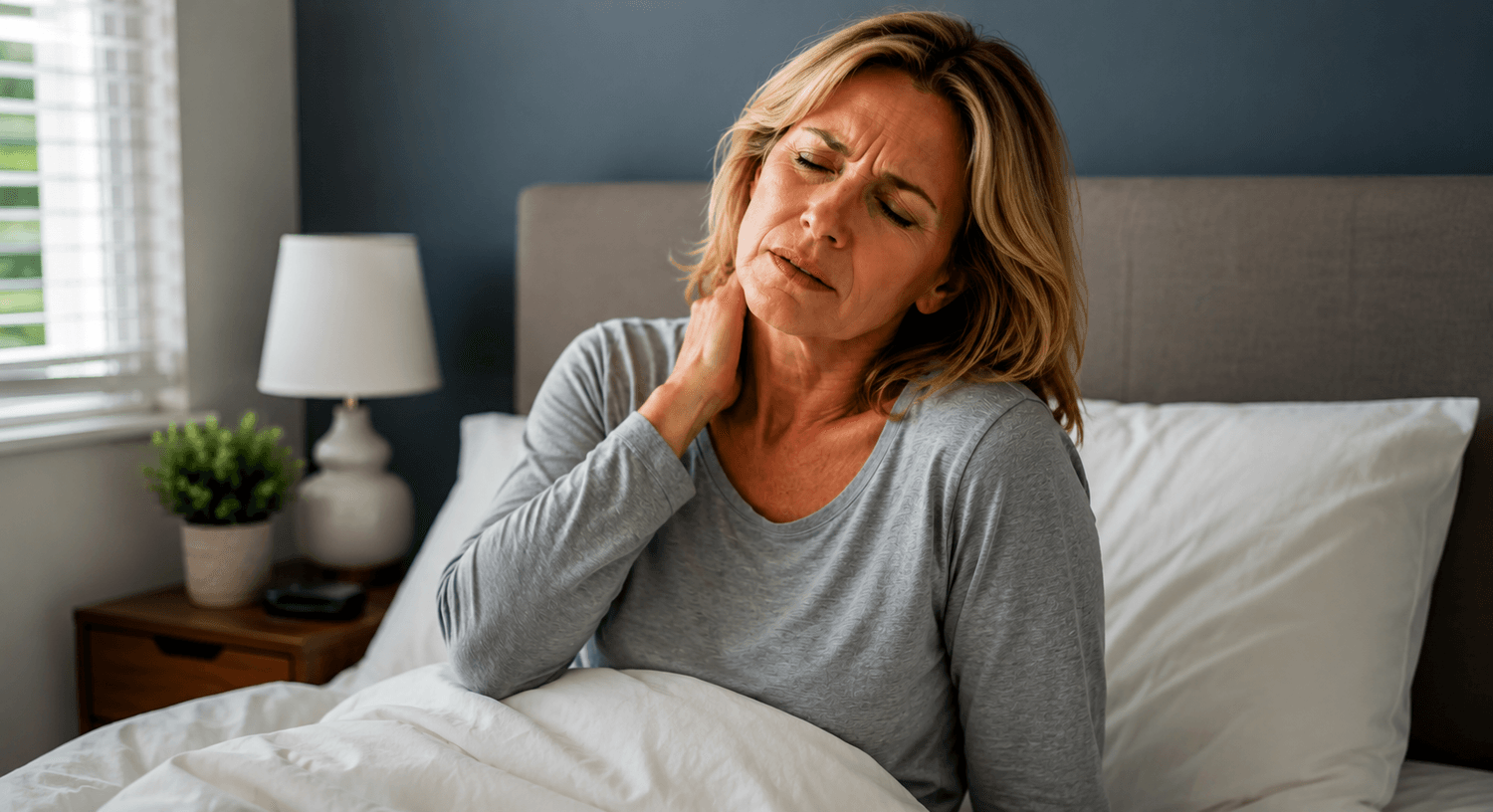
Photo: A common morning experience for the 80 million Americans who wake up with neck or shoulder pain.
I Thought I Was Just “Getting Older.” The Truth Was Much More Serious.
I'm going to tell you something I'm a little embarrassed to admit.
For almost three years, I knew something was wrong with how I was sleeping — and I did nothing about it.
I'm Jennier. I'm 54 years old, I work as a regional sales manager in Nashville, Tennessee, and I am, as my wife will happily confirm, the kind of person who doesn't go to the doctor unless something is visibly broken.
The signs were all there. I was exhausted every morning no matter how much I slept. I had a foggy, underwater feeling in my brain for the first two hours of every workday that coffee barely touched. My memory wasn't what it used to be. I'd walk into a room and forget why I was there. I'd lose track of conversations mid-sentence.
I told myself it was stress. It was the job. It was getting older. It was life.
My wife, Karen, knew better. She'd been watching me sleep for years.
1
How It Started
It was a Tuesday night in February about eighteen months ago.
Karen woke up at around 2am. She said she'd been lying there listening to me snore for about an hour — which was apparently normal — when the snoring just stopped. Complete silence. She waited. Five seconds. Ten seconds. Fifteen.
She said she sat up in bed and put her hand on my chest to feel if I was breathing.
I wasn't. Not for what she estimated was close to twenty seconds.
Then I gasped — a loud, sudden intake of breath — rolled over, and went back to snoring. I had no idea any of it had happened.
She woke me up immediately. I remember being disoriented, confused, and a little annoyed at being woken up at 2am. She was shaking.
She made me promise to see a doctor the next day. And for once in my life, I didn't argue.
$3,200+ / year
Between doctor visits, sleep tests, CPAP equipment, and failed products, sleep apnea became an expensive problem fast.
I started falling asleep on the couch because I was afraid of keeping my wife awake all night.
⚡ Sound familiar? See the sleep support pillow Jennifer says helped reduce her morning neck pain and finally wake up feeling rested again — or return it within 60 nights for a full refund..
2
Everything I Tried
(And Why It Didn't Last)
My primary care doctor ordered a home sleep study — one of those kits they send to your house where you sleep with a monitor on your finger and a sensor on your chest for a night.
The results came back within a week.
Moderate obstructive sleep apnea. An AHI — apnea-hypopnea index, which measures how many times per hour your breathing is disrupted — of 22.
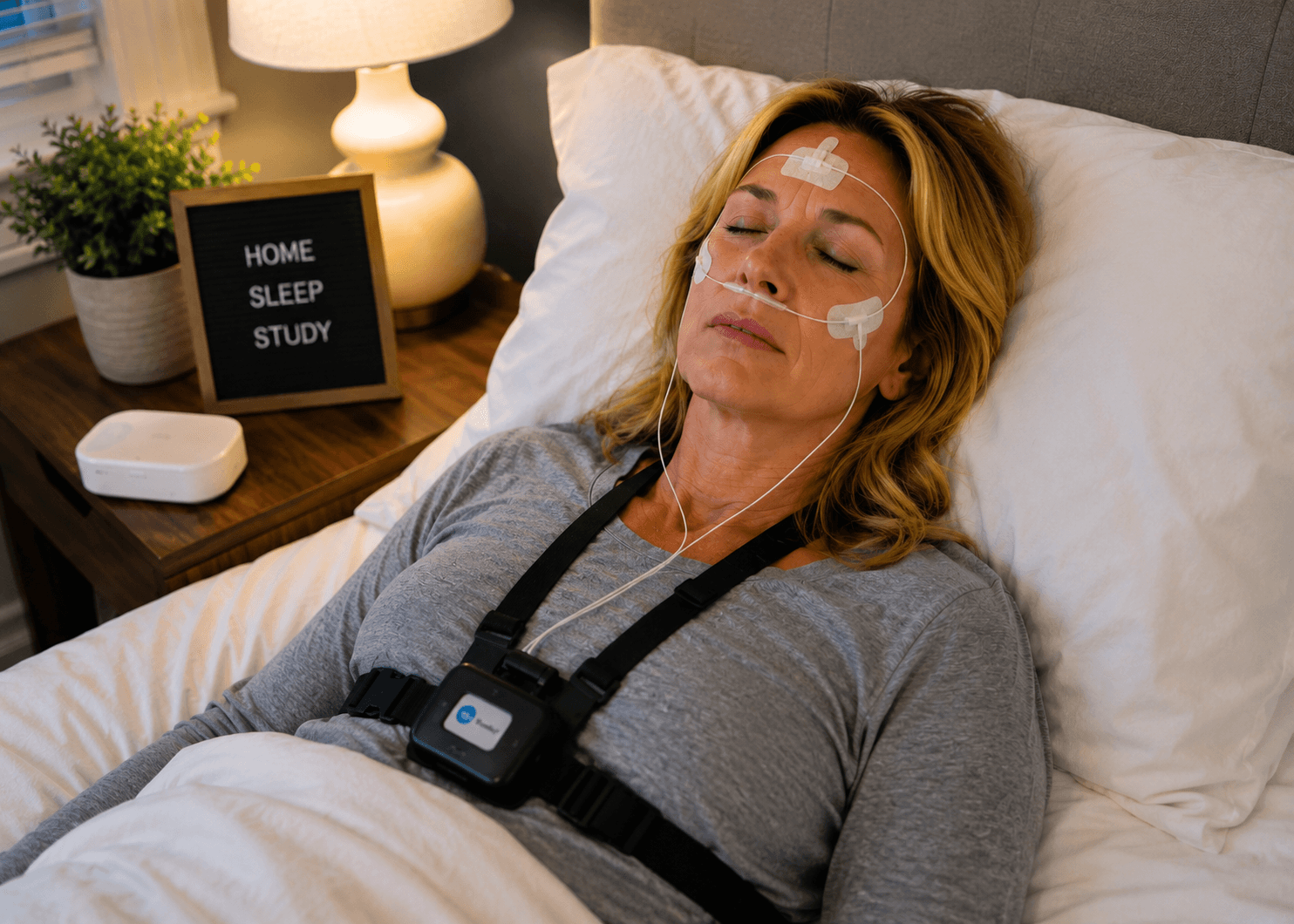
"I had a home sleep study, monitoring my sleep for a week."
Which means my breathing was being interrupted, on average, 22 times every hour I slept. Nearly once every three minutes.
The doctor explained what that meant: every time my airway collapsed and my brain triggered a partial awakening to restore breathing, I was being yanked out of the deeper stages of sleep. Not fully awake — just enough that I'd never complete a full restorative sleep cycle. Night after night after night for years.
That explained everything. The exhaustion. The fog. The memory issues. The feeling of running on empty no matter how early I went to bed.
The recommended treatment was straightforward: CPAP therapy. A machine that pushes a continuous stream of air through a mask to keep the airway open during sleep.
I went home, researched it, and bought one.
Why CPAP Therapy Failed for Me
I want to be clear: pain medications and muscle creams can help. For many people dealing with neck pain, especially severe cases, professional treatment is absolutely necessary and sometimes there’s no true substitute.
But for me, it was months of frustration.
The pain itself wasn’t even the worst part — though waking up stiff every morning was exhausting. The worst part was how it affected the rest of my life. I’d wake up with tension running from my neck into my shoulders, and some mornings even turning my head while driving felt uncomfortable. It felt unnatural in a way my body simply stopped accepting as “normal aging.”
I tried everything. Different sleeping positions. Expensive mattresses. Heating pads. Stretching videos before bed. Some nights I’d finally fall asleep comfortably — only to wake up a few hours later with the same pressure and stiffness creeping back into my neck.
My follow-up appointment with my doctor wasn’t very encouraging. She recommended physical therapy. She suggested improving my posture during the day. She was patient, professional, and genuinely trying to help.
But she also mentioned something almost in passing that stayed with me. She said that a large number of chronic neck pain cases actually worsen during sleep because of poor cervical support and spinal alignment — especially for people who sleep on their side or constantly change positions at night. She explained that for people like me, improving nighttime neck support was sometimes worth exploring before moving toward more aggressive treatments.
I went home that night and started researching ergonomic neck support and sleep posture.
3
What My ChatGPT Told Me
The Research That Changed Everything
What I learned over the next several evenings of research completely changed the way I thought about my neck pain.
The research on sleep posture and cervical alignment was eye-opening. When the neck stays tilted at an unnatural angle for hours during sleep, it places continuous pressure on the cervical spine, muscles, and surrounding nerves. Over time, that pressure can create stiffness, inflammation, tension headaches, and the kind of morning neck pain that follows you throughout the entire day. This is why sleeping with poor neck support is often much worse for people already dealing with chronic tension — and why so many people wake up feeling sore even after a full night in bed.
I also learned something that surprised me: many traditional pillows don’t actually support the natural curve of the neck. They either push the head too far forward or allow it to sink too deeply, forcing the neck into an awkward position for hours at a time. And for side sleepers especially, that misalignment can quietly strain the muscles and joints night after night without them even realizing it.
But what I hadn't understood before was how much of this positional problem is driven by the pillow.
Most pillows — including memory foam ones — don't actually maintain the neutral head-neck alignment required to keep the airway open consistently. They compress differently as you shift positions. The height and angle of your head at midnight is genuinely different from what it was when you fell asleep. And every time that angle changes in a way that drops your chin toward your chest or lets your head fall back, your airway geometry changes with it.
I found several references to contoured cervical support pillows designed specifically to address this — pillows with different support zones engineered to maintain neutral alignment whether you're sleeping on your back or your side. One kept coming up consistently in the research and in user reviews: Derila Ergo.
I read through the design specs. The contoured butterfly shape, the shoulder arch release zone, the high-density foam with shape retention. It addressed, at least in theory, exactly what my sleep specialist had described as the positional component of my apnea.
Karen ordered it that same night.
4
The First Two Weeks —
Night by Night
N1
Night 1 — Not sure yet
I'll be honest: the first night I noticed nothing dramatic.
The pillow felt different — the shape takes adjustment, especially coming from a standard flat pillow.
M2
Morning 2 — I was confused
I woke up the second morning thinking I'd made another expensive mistake.
M3
Morning 3 — Something is different
The third morning was different. I woke up and lay in bed for a moment, taking inventory the way you do when you've been sick for a long time and you're checking whether you feel better.
My head was clear. Not "clear after two cups of coffee" clear. Clear immediately, the way it used to feel twenty years ago.
I got up without hitting the snooze button. I made coffee out of habit and drank half of it before realizing I didn't actually need it to function.
Karen said I hadn't snored at all the night before — or if I had, not loud enough to wake her.
W1
End of Week 1
By the end of the first week, she was sleeping through the night consistently.
W2
End of Week 2 — I texted Janet
By the end of the second week, I was waking up before my alarm and actually feeling rested when I opened my eyes — something I genuinely could not remember experiencing in years.
5
Three Months Later — What's Actually Different
I had a follow-up appointment scheduled about three months after I first started taking my neck pain seriously.
I almost cancelled it. I felt so much better that I didn’t want to jinx anything, and part of me didn’t want to hear that what I was experiencing wasn’t real.
I went anyway.
The difference was undeniable. Remember how I used to wake up every morning with stiffness, pressure, and pain running through my neck and shoulders? By that point, most mornings I was waking up feeling noticeably more rested and far less tense. The constant tightness I had been carrying for years had improved more than I ever expected from simply changing the way I supported my neck while sleeping.
My doctor reviewed everything and asked what I had changed. I told her about improving my sleep posture and switching to a more ergonomic pillow designed to support proper cervical alignment during the night. She said she wasn’t surprised — she’d seen patients with chronic neck tension experience significant improvement once nighttime pressure on the cervical spine was reduced. She told me to continue what I was doing and monitor how my body responded over the next several months.
I’m not going to claim that a pillow magically cured all my neck problems. I don’t know what my body will feel like years from now or whether I’ll eventually need additional treatment. What I do know is that right now, five months later, I’m sleeping better than I have in at least a decade.
The morning stiffness is mostly gone. I’m no longer waking up feeling exhausted before my day even starts. My focus is sharper. My energy during work feels more consistent. Even the tension headaches I used to get several times a week have become far less frequent.
Karen noticed the difference before I fully did. She told me I stopped constantly shifting positions during the night months ago. Last week she even said she couldn’t remember the last time I woke up complaining about my neck hurting first thing in the morning.

The strangest thing is how I feel about going to bed now. I used to dread falling asleep — wondering if I’d wake up with that same neck stiffness, pressure in my shoulders, and exhaustion that followed me through the entire day. Now I actually look forward to bedtime because for the first time in years, I feel like my body is truly recovering while I sleep.
That might sound like a small thing.
It isn’t.
6
The Pillow I Now Recommend to Everyone
I've recommended the ergonomic pillow I started using to several people since then — my sister who constantly woke up with neck stiffness, a coworker who complained about daily shoulder tension, and two friends who said they were tired of waking up sore every single morning.
I tell all of them the same thing I’ll tell you:
I’m not saying this replaces medical care. If your neck pain is severe, persistent, or connected to an injury, you absolutely should get evaluated by a doctor or specialist. Some conditions require proper medical treatment, and that conversation matters.
But if you’re dealing with mild to moderate neck pain, morning stiffness, tension headaches, or constant discomfort after sleeping — and you’ve already tried stretching, changing mattresses, or different sleeping positions without much success — improving how your head and neck are supported during sleep was the most logical first step I found. And for me, it was the step that made everything else better.
The pillow is currently available at a major discount, with free shipping and a 60-day money-back guarantee. Which means you have two full months to find out whether it helps improve your sleep quality, morning stiffness, and neck discomfort — with essentially no financial risk if it doesn’t.
Considering what years of poor sleep posture cost me in energy, focus, comfort, and daily quality of life — giving my neck proper support during sleep turned out to be one of the best decisions I’ve made for my health.
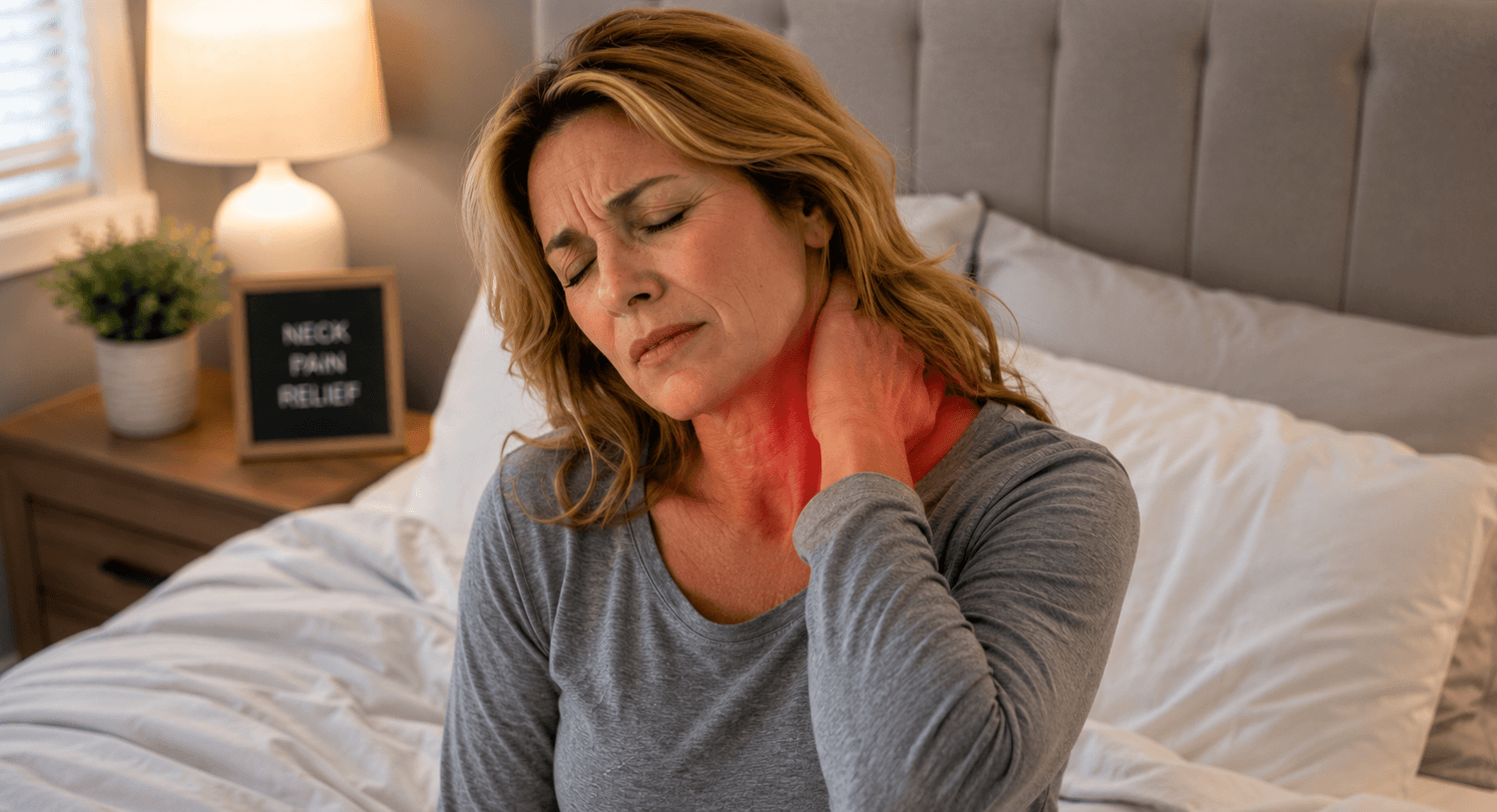
Derila Ergo Memory Foam Pillow
Ergonomic Design
High-Density Foam
70% OFF Today
60-Night Trial
Designed to support healthier nighttime breathing and more comfortable sleep, this pillow is currently available with a significant discount and a full 60-day money-back guarantee. Either it helps improve your sleep quality — or you return it and pay nothing.
If You Wake Up Exhausted Every Morning, This Is Worth Trying
The worst case: you return it and pay nothing. The best case: what happened to me.
🔒 Currently 70% OFF + Free Shipping + 60-Night Money-Back Guarantee
Still on the fence? I understand. I spent three years telling myself I'd deal with it later.
The 60-night guarantee means you have nothing to lose by trying it now. Two months. If your sleep, your energy, and your morning clarity don't genuinely improve — return it, pay nothing, and you're exactly where you started.
If they do improve — and based on the research and my own experience, there's a real chance they will — you'll wonder why you waited.
Important: Sleep apnea is a serious medical condition. This article reflects one person's personal experience with mild to moderate positional sleep apnea and is not intended as medical advice. If you suspect you have sleep apnea, please consult a qualified healthcare provider.
✓ Free Shipping · ✓ 60-Day Guarantee · ✓ Secure Checkout
Disclosure: This post may contain affiliate links. I may receive a small commission if you purchase through my links, at no additional cost to you. My experience and opinions are entirely my own. This is not medical advice — please consult your doctor if you have chronic pain.
© 2026 emilycarterwelness.com · Independent Sleep & Wellness Research · Privacy Policy · Affiliate Disclosure